
Hallpass Journal / Business attraction
What site selectors need to know about your community—and how to communicate it
Make it easy to check whether your community can support the project.

In this article
- Start with the site-selection project, not a universal ranking
- 1. Workforce: show site selectors relevant skills and labor-market geography
- 2. Utilities: distinguish nearby infrastructure from confirmed site service
- 3. Sites and buildings: show property details and verification contacts
- 4. Logistics: show site selectors practical freight routes
- 5. Costs and incentives: explain business costs and eligibility conditions
- 6. Project execution: show who coordinates site-selection support
- Give site selectors a reliable webpage for each community claim
- Use local business stories to make site-selection evidence memorable
To market your community to site selectors, organize your content around the questions a location decision must answer: the workforce, utilities, property, connections, costs, and path to opening. Give each answer a source, a date, a clear geographic boundary, and someone who can help with the next question.
Imagine a manufacturing project manager looking at your website between meetings. “A skilled workforce and excellent infrastructure” sounds encouraging. It does not tell them whether the people, power, or building their project needs are available.
Your content should help them move from interest to a useful conversation.
Start with the site-selection project, not a universal ranking
A food processor, a distribution operation, and a professional-services office need different information. Decide which kinds of projects your community is equipped to pursue before deciding what to feature.
For an industrial prospect, that may mean utility requirements, building specifications, freight access, and relevant occupations. An office prospect may need more detail about professional talent, office space, broadband, and employee access.
The Site Selectors Guild's public overview of its September 2026 State of Site Selection report emphasizes uncertainty around infrastructure, permitting, workforce, community opposition, and policy. It also identifies power, talent, and infrastructure as important to competitiveness.
Our communication takeaway: explain what is known, what still needs confirmation, and how to get that confirmation. The categories below are an editorial checklist, not a claim that every project ranks them in this order.
1. Workforce: show site selectors relevant skills and labor-market geography
“A large labor force” is too broad to answer a hiring question.
Start with the occupations your target industries need. Publish the source period, geography, employment estimates, and wage measures together. A regional figure should not look like a city-only figure.
The Bureau of Labor Statistics' Occupational Employment and Wage Statistics overview describes estimates of employment and wages by occupation for states and metropolitan and nonmetropolitan areas. These describe the employed workforce; they are not a count of people ready to join a new employer.
For commuting context, the Census Bureau's OnTheMap tool maps where workers live and work. Label the data year and area used. Do not turn commuting patterns into a promise about how many people will apply.
What to publish: a focused workforce page with relevant occupations, clearly labeled wage data, the labor-market boundary, training partners, and a named research contact.
The story to add: a real employer and instructor explaining how a particular skill is taught. Show the practice, equipment, or assessment that makes the partnership concrete. Verify any completion or placement numbers before including them.

2. Utilities: distinguish nearby infrastructure from confirmed site service
A power line near a parcel is a starting point for a question.
Ask the serving utility what information can be shared about the site's service, the process for evaluating a proposed load, and the conditions affecting delivery. Have the provider review the public wording.
Use the same discipline for water, wastewater, gas, and broadband where they matter to the project. The useful question is what the operation requires and what has been confirmed for that location.
What to publish: provider names, dated service information, the right technical contact, and a clear explanation of how project-specific requirements are assessed.
Separate existing service, planned improvements, and matters under evaluation. If a connection date depends on engineering or additional work, say so. Avoid a broad “ready now” claim built from a conversation about a different project.
A short utility-provider interview can explain the assessment process. It should not substitute for confirmation of capacity or timing.
3. Sites and buildings: show property details and verification contacts
Treat a property page like a useful project file.
Include the address, map, acreage or floor area, permitted public specifications, ownership or listing contact, and the date availability was checked. Identify where someone can obtain surveys, environmental information, zoning details, or other relevant due-diligence material.
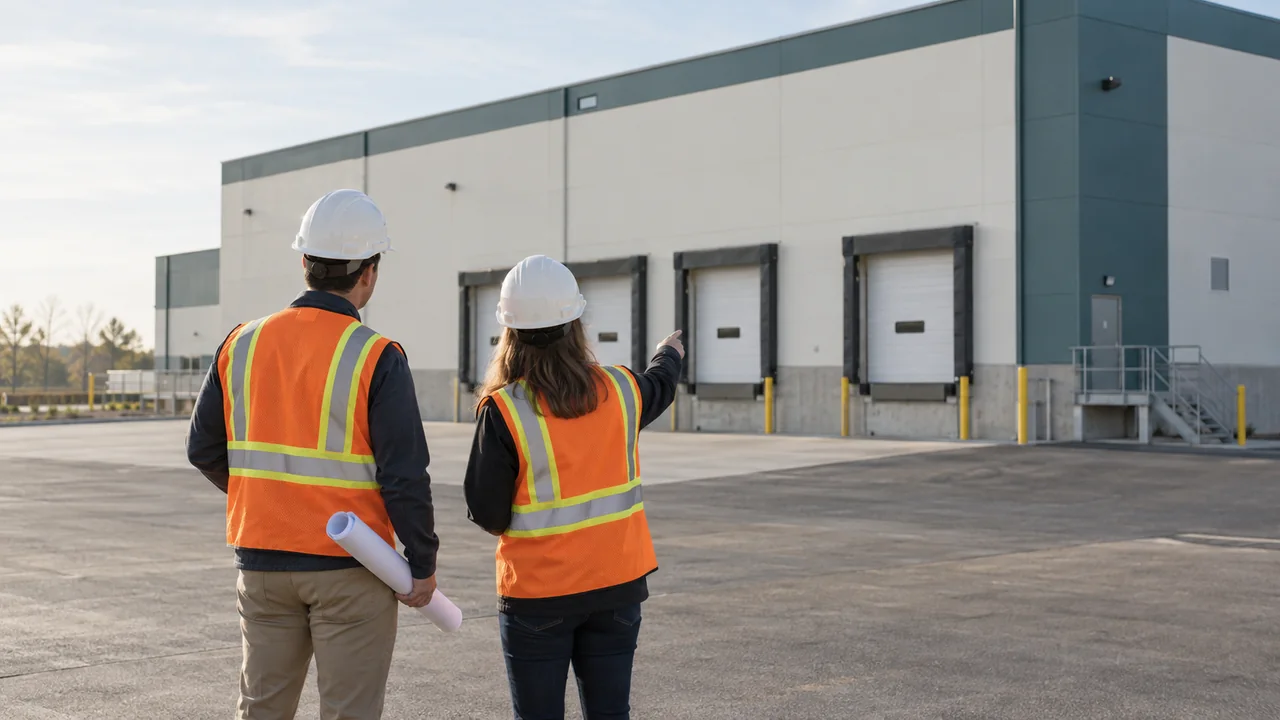
For a building, ask the listing or technical team which specifications are important for the intended use. Clear height, loading arrangements, and floor characteristics may be relevant; marketing staff should not guess them from photographs.
What to publish: one current page per featured property, supported by documents that the responsible parties have authorized you to share.
If a site has a readiness designation, name the program and link to its criteria or listing. State what has actually been evaluated. Leave project-specific suitability for the appropriate technical review.
The story to add: a property walk-through with the person who can explain the space. Use current photographs of that property and distinguish completed work from renderings or future plans.
4. Logistics: show site selectors practical freight routes
“Easy access to major markets” leaves the reader to define easy.
Choose the connections that matter to the intended operation: highway access, a freight terminal, a port, an airport, or a supplier network. Show the actual route or connection and identify where the information came from.
Distance alone does not establish journey time, cost, or available service. If you publish a travel-time estimate, explain its basis and avoid presenting it as a guaranteed freight schedule.
What to publish: a legible map with named destinations, relevant access details, and links to the operators who can answer service questions.
The story to add: an employer explaining a verified local supplier relationship or how its operation uses a specific connection. Keep confidential customer and shipment details out of the public piece.
5. Costs and incentives: explain business costs and eligibility conditions
A headline incentive amount is hard to evaluate without the requirements.
Have the administering agency verify eligibility, the application and approval process, relevant deadlines, performance conditions, and how the benefit is delivered. Link to the current official guidance.
Separate published program terms from project-specific estimates. Do not present a potential benefit as an approved award, and do not combine unrelated cost figures into an apparent project budget.
What to publish: an incentives overview that helps a prospect identify the right program and contact, with sources and update dates.
The same principle applies to public grant campaigns: people need to understand the financial conditions before they plan around the money. Our local business grant promotion guide shows how to communicate those conditions clearly.
6. Project execution: show who coordinates site-selection support
“Business friendly” becomes more useful when the next step is visible.
Map the process with the people who actually administer it. Identify the relevant planning, permitting, utility, workforce, and economic development contacts. Explain what information they need to begin a discussion.
Do not promise an approval timetable your organization does not control. If you share a past project's experience, identify it as that project's timeline and explain the context.
What to publish: a simple process page and a named lead contact who can coordinate introductions.
A real employer story can show how a team resolved a specific question during an expansion. It should explain what happened and who helped, without implying that every future project will receive the same decision or timeline.
Give site selectors a reliable webpage for each community claim
A social post can introduce a strength. Give the reader a durable page where they can examine it.
In DCI's 2023 Winning Strategies research summary, 73% of respondents said they planned to visit an EDO website during their next site search. That is a dated survey finding about intended behavior, not a current measure of visits to your website.
For your own site, use this working map:
| Question | Best home for the answer | Who should verify it? |
|---|---|---|
| Can we recruit the relevant people? | Workforce or industry page | Workforce researcher and training partners |
| Can this operation be served? | Property page linked to utility information | Serving providers |
| Does this property merit further investigation? | Individual site or building page | Owner, broker, and relevant technical specialists |
| How would materials and people get here? | Location and logistics page | Transport operators and source owners |
| What support might the project qualify for? | Incentives page with official links | Program administrators |
| Who can help us assess the next step? | Project-support page and visible contact | EDO lead and responsible agencies |
Give each page a content owner and a review date. When a building is leased, a program closes, or a partner changes its information, update the answer wherever you repeat it.
Use local business stories to make site-selection evidence memorable
You do not need to choose between a compelling business story and a useful information page.
Start with one strength your target industry needs. Find a real person who can explain it through a specific experience. Then connect that experience to the current facts a prospect needs to evaluate the community.
A technical-college partnership becomes easier to picture when an instructor shows how students inspect a machined part. The linked workforce page can supply the program contact and verified information about the training. Neither a good film nor a compelling graduate story proves that an employer can fill every opening.
That is the relationship to aim for: a story people can remember, with evidence they can inspect.
If your community has useful information scattered across old PDFs, partner websites, and staff inboxes, talk with Hallpass about an EDO website and content plan. Start by making one important project question easier to answer.