
Hallpass Journal / Business attraction
Why industrial site-readiness claims need evidence and a date
Give site selectors a clear account of what has been checked and what still needs confirmation.

In this article
An economic development organization should support an industrial site-readiness claim with the relevant documentation, its date and scope, and a contact who can answer project-specific questions. If a property has a formal certification, name the program and link to its current record. Keep unverified conditions visible in the information your team shares.
“Shovel-ready” is an appealing headline. It is a difficult starting point when nobody can tell what work sits behind it.
Imagine a prospect opening a site flyer with that phrase across the top. The aerial image looks promising. But the document does not identify the parcel, explain the utility statement, or say when the information was checked.
The next conversation now has to reconstruct the meaning of the headline.
Explain what your industrial site certification covers
A formal certification should be described through the issuing program's requirements.
For example, Georgia's GRAD program lists due-diligence categories including environmental assessment, preliminary geotechnical investigation, zoning, utility service assessment, and wetlands and stream delineation. Its process includes a third-party application review and a board review for approval.
That is a concrete program with defined requirements. It is not a universal definition of readiness for every property or project.
For your site, verify the certification name, issuing organization, current status, and applicable record before putting a badge on the page. Link to the official information where available. Ask the program contact to confirm any conditions you summarize.
If a property has no formal certification, describe the work actually completed. A useful account of verified studies and remaining questions is better than a label whose meaning your team cannot explain.
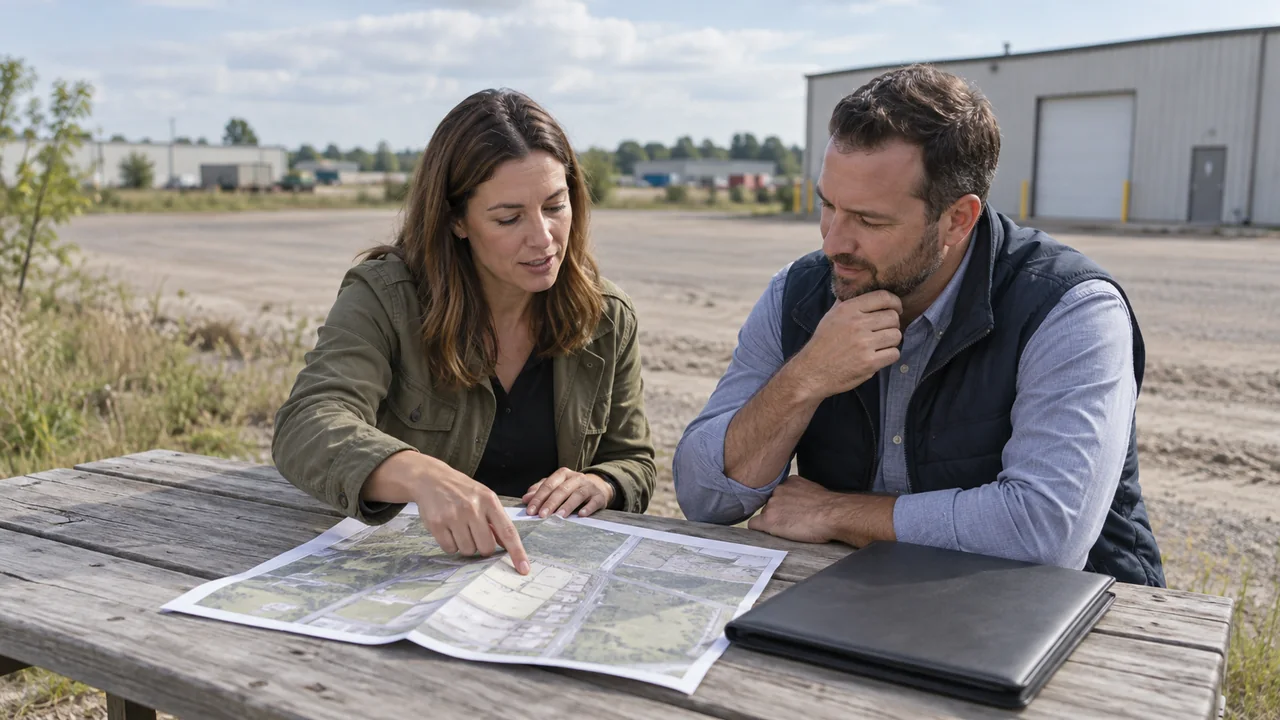
Give each site-readiness claim its own evidence record
Use an internal record to connect public wording to its support.
Think of it as the back of the property flyer: the details your team needs before confidently putting a statement on the front.
| Claim to review | Record to assemble with the responsible specialist | What the public explanation should clarify |
|---|---|---|
| Property is available | Owner or authorized representative's current confirmation | Parcel, relevant terms, confirmation date and contact |
| Site has been assessed | Applicable study or report and its scope | Which assessment was completed, date and where questions go |
| Utilities can support the project | Provider's response to the relevant requirements | What has been assessed and what still requires confirmation |
| Site is certified | Issuing program's current record | Program name, scope, status and official reference |
| A development step is planned | Responsible organization's approved account | Current stage and conditions still outstanding |
This is Hallpass's communications review pattern, not an engineering or legal due-diligence standard. Have the specialists responsible for each statement confirm the wording and supporting record.
The site-selector communications guide places these property questions alongside workforce, logistics, costs, and project coordination.
Keep nearby utilities separate from confirmed project service
A utility line on a map and a provider's assessment of a proposed operation answer different questions.
Before publishing capacity or service claims, ask the provider what has actually been confirmed. Record the relevant requirements, source date, and any qualifications the provider needs included.
Describe planned infrastructure at its actual stage. “Under discussion,” “approved,” and “completed” should not collapse into the same public statement. Let the responsible organization verify the description.
Your communications should make it easy for a prospect to reach the person who can investigate its needs. Marketing copy should not independently settle a service question the provider has not answered.

Show the date of the site evidence, not just the webpage update
Updating a webpage today does not make an older study a new study.
Keep the underlying source date and scope available beside the relevant information or in the supporting record. State what your team checked during its latest review, rather than implying it repeated every technical assessment.
Assign review responsibility when ownership, availability, certification status, or infrastructure information changes. Check the property page, downloadable flyer, listing service, and partner copies your team manages.
When an answer is uncertain, identify the question and the contact who can address it. Quietly carrying forward a confident sentence does not resolve the uncertainty.
Give site selectors an understandable next verification step
A strong property page helps the reader distinguish established information from the work still required for its project.
Before publishing, ask a colleague to trace one important claim back to its source. Can they identify the parcel, the supporting document or responsible organization, its date, and the next contact?
If that chain is missing, revise the claim or assemble the record before expanding promotion.
A property story can still be engaging. Explain the preparation work, the people coordinating it, and the questions the evidence helps answer. Use real project photographs and verified details when telling that story.
Then make the practical information easy to inspect. The memorable headline should lead to a useful account of the site.
If your property information is spread across flyers, partner databases, and outdated pages, talk with Hallpass about making your EDO website clearer.